
Flip the Script
From Resentment to Resilience

Oh, dear reader. I warned you this could happen. After wondering aloud whether we are living in an Age of Resentment, I willfully slithered down the resentment rabbit hole.
My first fatal step was etymological. My second was Nietzsche. First things first.
It turns out that resentment has a rich linguistic history. Resentment comes to English from French via the Latin. The path looks roughly like this:
Latin: sentire (v.) - to feel, perceive
Old French: ressentir (v.) - to feel again, experience again
Modern French: ressentiment (n.) - a re-feeling, renewed feeling
Resentment first appears in English in the early seventeenth century. But the original English connotation was not negative. English speakers in the Georgian era used resentment to mean “the act of feeling strongly.” So, a person with “great resentment” was someone who felt things deeply.
Only during the late seventeenth and eighteenth centuries did the word come to mean indignation at a wrong that manifests in a sense of injury that hardens into persistent bitterness.
So there’s a tension embedded in the history of the word resentment. It began as a re-living of an experience, then became the capacity to feel deeply, and is now the self-sabotaging habit of persistently hurting from the same wound.
The script flipped. Resentment started to hurt. The word itself is thus ingrained with a certain tragedy.
But resentment has a cousin in ressentiment.
The latter is a French philosophical term of art that became enormously important through the work of Friedrich Nietzsche (1844-1900).
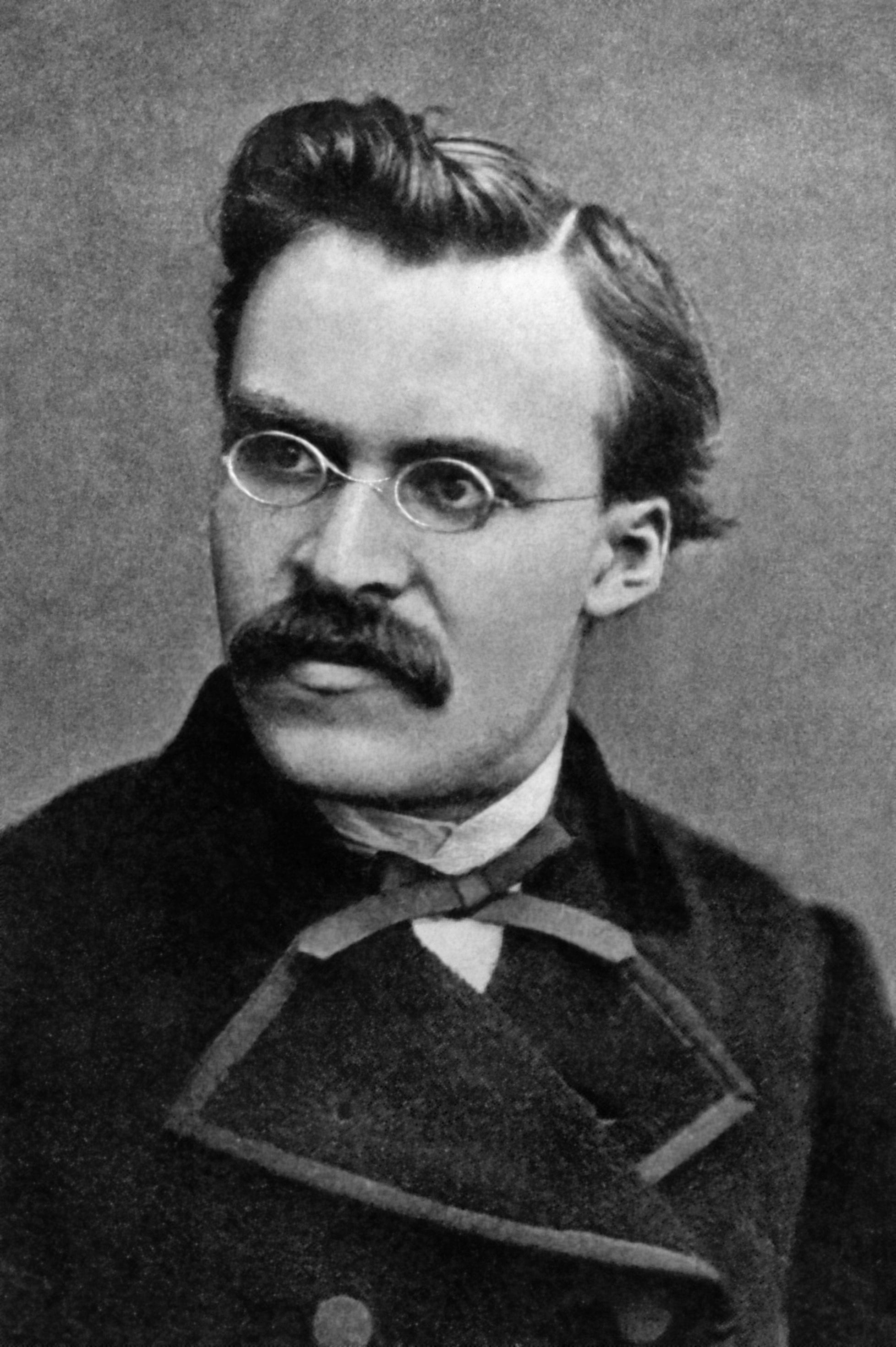
Nietzsche used ressentiment to describe something more than the colloquial English or French usage. His ressentiment is:
an injury that cannot be avenged
anger that cannot be expressed
bitterness that ferments over time
moral judgments created from powerlessness
Nietzschean ressentiment isn’t just an emotion re-experienced. It’s a deep, chronic, simmering grievance that cannot be acted upon directly and therefore gets transformed into a moral worldview.
You might see where I’m going with this. And yet, here I go.
Nietzschean ressentiment overtakes the person who feels powerless but can’t fight back. Their inability to act, whether real or perceived, becomes their moral system. Their powerlessness overtakes them. Their powerlessness becomes them.
Whether or not one agrees with the all or part of the broader Nietzschean paradigm, his version of ressentiment has profoundly shaped modern discussions of politics, identity, class conflict, and religion. It’s at the heart of the culture wars. For realsies: Nietzsche really matters here.
So, I will endeavor to unpack the Nietzschean view of ressentiment. But I do so with the caveat that, far from being an expert, I ride the struggle bus—which may or may not be the short bus—to comprehend Nietzsche. So take this with a grain of salt. But having consulted with two wicked smart friends with fancy degrees who are kind enough to condescend to countenance me, I think I can share the basic contours of it.
In Good and Evil, Good and Bad, the first essay in his profoundly influential book, Genealogy of Morality (1887), Nietzsche develops a theory of the genealogy of ressentiment. What follows is my best effort to pose his argument step by step.
Step 1: The strong define the good
Nietzsche argues that in aristocratic societies (think: Homeric Greece, the Roman Kingdom, medieval Europe), powerful people looked at themselves and said:
We are strong
We are courageous
We are successful
We are beautiful
Since we, the nobles, are obviously good (I mean, just look at us. Now look at you. Ick!), these virtues define goodness.
Nietzsche calls this the “master morality.”
To the nobles, the opposite of good wasn’t evil. The opposite of good was simply ordinary. Weak. Unremarkable. NPCs, as the kids say.
Step 2: The weak can’t fight back, cuz they weak
The lower classes, the conquered, everyone living under the strong has a problem: they are (or feel) powerless to defeat their rulers. They can’t even express their anger openly. Or safely. Or clearly.
So their hostility has nowhere to go. It just festers.
This festering hostility becomes ressentiment.
Step 3: The psychological revolution
The powerless perform what Nietzsche sees as an astonishing psychological and moral maneuver.
Instead of saying “we are weak,” the powerless begin saying, “strength is bad.”
Instead of saying, “we failed”, they say, “success is morally suspect.”
Instead of saying, “we can’t fight back,” they say, “forgiveness is the highest virtue.”
They flipped the script!
So now humility becomes good. Meekness becomes good. Suffering becomes noble.
By contrast, strength becomes evil. Pride becomes evil. Envy becomes evil, sinful even.
Nietzsche calls this the “slave morality.”
Step 4: Christianity drives the script flip
Nietzsche sees Christianity as the most successful historical expression of this moral revolution. He is making the historical claim that Christianity turned the resentment of the powerless into the dominant moral language of the West.
Blessed are the meek. The last shall be first. Turn the other cheek. You know the verses. To Nietzsche, these religious teachings are evidence of a complete, and completely messed up, inversion of values.
Elsewhere, Nietzsche reaches for his trademark hammer, claiming that “Christianity has taken the side of everything weak, low, and botched.” Script flipped.
Step 5: Ressentiment creates moral condemnation
The resentful person doesn’t just dislike the powerful. They morally condemn the powerful. The internal logic looks like this:
I suffer because of them; thus, they are bad. Their very success is proof positive of their wickedness; my suffering is proof positive of my virtue.
Let the Suffering Olympics begin! Everyone will medal this year.
For Nietzsche, resentment doesn’t describe reality; it creates a moral narrative that justifies itself.
Nietzsche’s beef with resentment is not merely that resentment feels shitty. His deeper concern is that a culture built on ressentiment becomes reactive rather than creative.
The resentful person asks, “Who can I blame?” The healthy person asks, “What can I build?”
The resentful society asks, “Who ruined us?” A healthy society asks, “Who can we become?”
Resentful people create values primarily as a reaction against others. They do not create values of the highest order. They become defined less by what they love than by what they oppose.
Can we flip the script?
Brazen political corruption. Social fragmentation. Economic inequality. Environmental anxiety. Cultural upheaval. Algorithms that reward outrage. Endless opportunities to compare ourselves with everyone else. Our era manufactures resentment with astonishing efficiency.
As I wrote, I reckon we live in Age of Resentment. It’s not our fault, but it is our problem.
While I am reticent to offer sufficient solutions, I will pause for now with some guiding questions:
Am I right? Is it indeed the case that both at the individual and societal level, we are increasingly defining ourselves through grievance and resentment?
At what point does resentment, justified or otherwise, become a personal or cultural identity?
Is the culture of resentment crowding out the culture of creativity?
What if our Age of Resentment is not because people have too little voice, but because so many people now have a voice (and a microphone), that grievances can circulate endlessly?
Once resentment becomes identity, does it necessarily generate more resentment? Does resentment beget resentment?
So we don’t fall into Nietzsche’s trap, how can we pivot from an Age of Resentment to an Age of Resilience (as I wrote about here and here)?
How can we find purpose in hardship, whether personal or collective, to shift us away from resentment quicksand?
Some psychologists argue that gratitude is the opposite of resentment. How can we practice gratitude to combat resentment? Practicing gratitude without naiveté, that is.
Can we possibly love our neighbor and love ourselves (let alone love our enemies, as I wrote about here and here) if we are riddled with resentment?
If Nietzsche is correct that wisdom comes from freedom from resentment, how do we begin to set ourselves free?
As always, I’m grateful for any feedback. Extra grateful if you’ll wrestle with these questions alongside me. Let’s flip the script together.
Yours,
DL
Hey you! I’m trying to sustain the quality and frequency of The Junction. It’s a labor of love, but it is labor. It helps me when you subscribe. At the very least, enjoy a free subscription.
If you don’t want to become a paid subscriber, but support me and want to show it, PayPal me a one-time donation. If you don’t like PayPal, you can buy me a coffee.
If money is tight, you can still help. How? Share The Junction with someone who might appreciate it.
Oh, and you’re always invited to check out my other projects over here.
“The man of ressentiment is neither upright nor naïve, nor honest and straight with himself. His soul squints; his mind loves dark corners, secret paths and back-doors…”
-Nietzsche