
Kingdom Comes!
Devlin McCluskey on Loss, Change, and Letting Go

Hey kids. It is my pleasure to share my interview with Devlin McCluskey of Devlin and the Harm about his new album. I cordially invite you to listen to it or read the gently edited version below.
Either way, check this album out on Bandcamp, Spotify, Deezer, or wherever you stream. Trust me on this one. You’ll want to be the first to tell all your friends about the album of the summer!
DL: Hey Devlin, thank you so much for joining me in conversation. I am absolutely smitten by your new album. I’ve had it on repeat in my ears and in my mind, since it dropped a couple of weeks ago. And it’s been transporting me. Wanting to share this experience with my readers, I was going to write about your album on my Substack. But instead, I mustered the moxie to reach out to you to seek a conversation about it. You were gracious enough to accept my invitation, and I’m grateful for that.
So, I was going about the business of coming up with interview questions for you. I was doing my due diligence—listening a lot, reading a bit—to find that you’ve been interviewed about the album several times. So, I thought that to spice it up for you, I’d ask you a couple of standard interview questions, and then play a little word association game with you. My hope is that instead of penning you in with questions, I could open up a freer space for reflection. Does that sound alright? Are you down to play games today at 9:30 a.m. in LA?
Devlin: Yeah, that sounds great. And thank you so much for asking me to do this.
DL: Total pleasure. Okay, so let’s roll then. As a history teacher at heart and by trade, I crave the story. Can I urge you to tell me the origin story of this album? How did this project get rolling?
Devlin: I think it really goes back to 2017-2018, where, my last band, The Dead Ships, that felt like it was going somewhere, really just went off a cliff. That band was fading away and the LA music scene felt like it was starting to die out, and I was just a few years removed from losing my best friend to suicide, my dad was dealing with a bunch of health issues and it felt like we were approaching the last chapter with him. In so many ways it felt as though the life that I had built in my 20s was very quickly gone and I was going towards a new start.
At the same time, the world was descending into this nonstop parade of idiocy. Out of just overall feeling of the world crumbling, this stormy time, came a few songs.
I generally try to write songs (or I find that I write songs) to process how I’m feeling about things, or to better understand how I’m feeling about things. I try to be open to surprising myself by picking up a guitar and seeing what comes out.
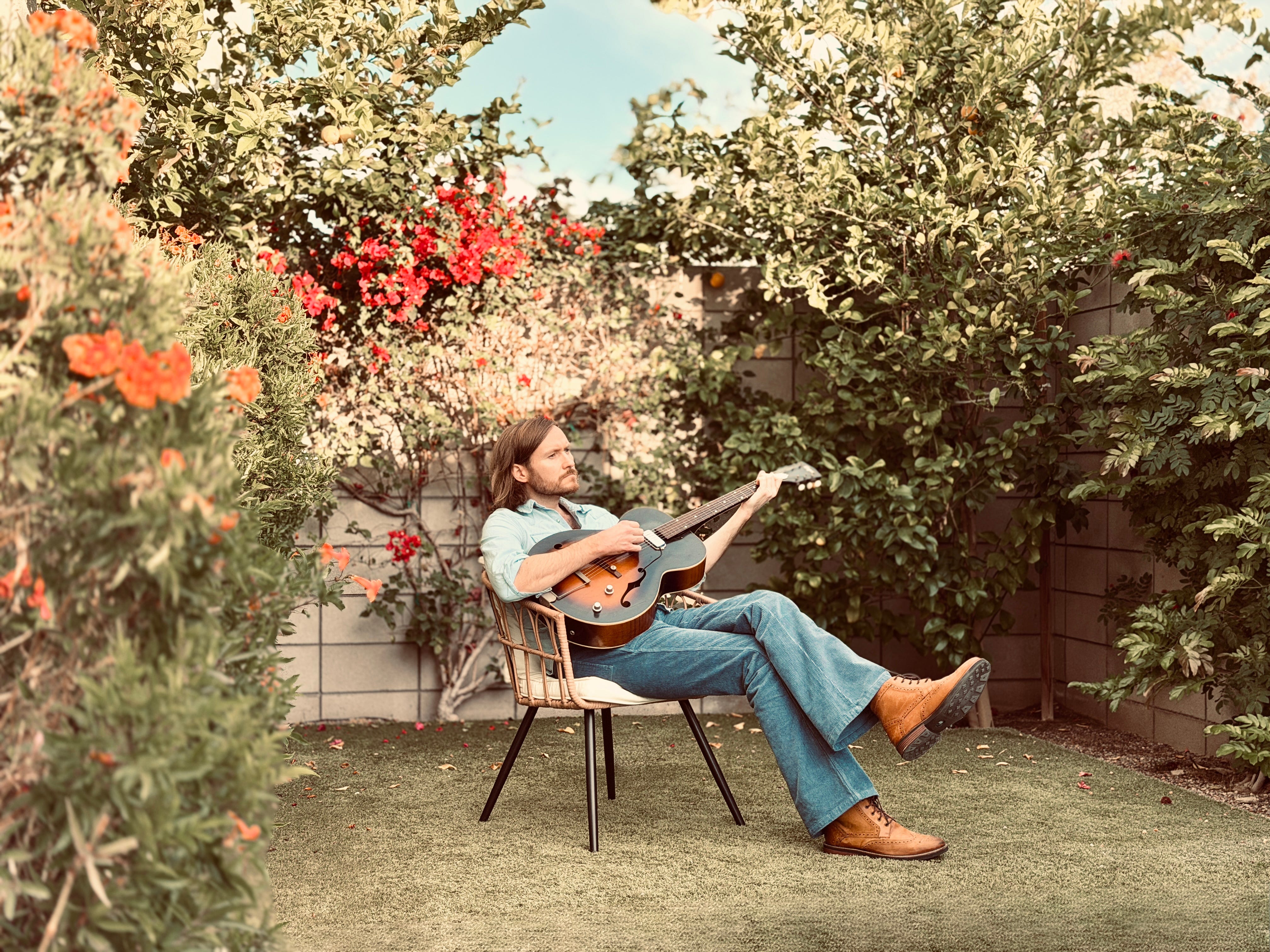
I had written a couple of songs that I loved; they blew me away. And so that was the origin of it. It all grew out of that.
DL: I’m very sorry to hear about your best friend and I’m sorry to hear about your father. I’m also, I should add, very sorry about the direction the world seems to be taking. Listeners to the album will hear some of that fear and some of that frustration.
Some of the feeling of frustration comes out because of the way the album was produced. I am blown away by the production value on this record. Can you approached some of the challenges you encountered in recording these songs and the post-production processes?
Devlin: Yeah, I have to say first and foremost, so much credit for the production value of the album, goes to our producer and mixer, Alex Newport. I don’t know if you’re familiar with him, but he’s a Grammy nominated mixer. He’s worked with Death Cab for Cutie, Bloc Party, The Mars Volta, At the Drive-In, City and Color, and the list goes on. I feel very fortunate that I met him in New York years ago and we hit it off and aligned in a lot of music tastes. He was supposed to produce the last album of my last band, The Dead Ships.
Over the years, I’ve been sending him songs. I sent him a handful of these new songs that I was writing in the hopes of maybe a new album. He really gravitated towards those songs. That inspired me to keep going.
Alex is phenomenally talented and was on board with all of these different crazy ideas that I had for big orchestrations, pulling from spaghetti westerns, baroque pop, and even some different classical ideas…
And then on top of that, we just had so many incredible musicians and contributors to it. Mike Nusbaum, who drums on all of the songs and is really the only other main member in this band. Everyone else is a hired gun.
DL: Wait. Can I pause you for just a second there?
Devlin: Yeah, yeah, yeah.
DL: I am blown away by the drumming on this album and the way the drums were recorded. Can you talk about that a little bit? Because it’s a highlight of the album so far as I’m concerned.
Devlin: I love to hear that! Because the drums on this were such a focal point for me, going back to the demos. I was really trying to think more rhythmically about the songs. I would end up having four drum tracks on at the same time. And then it was like, okay, how are we going to have one human being do this? Or are we going to try and record four drum parts? What’s important in this beat? Mike is such a phenomenally talented drummer that he was able to sometimes play like three drum parts at the same time or just distill them down to what was essential to the groove.
I wanted you to feel when you’re listening to it, like, “holy shit, that is an incredible drummer. Whoa!” And I was encouraging him in the studio to go more. Bigger. Like, what’s the crazier thing that you can do here? And he was always game to do it.
And as far as the actual recording, Alex Newport has a studio out in Joshua Tree, California. It is just the greatest possible experience to live in Joshua Tree for a week or two at a time in an RV that’s on his property, and record these songs…
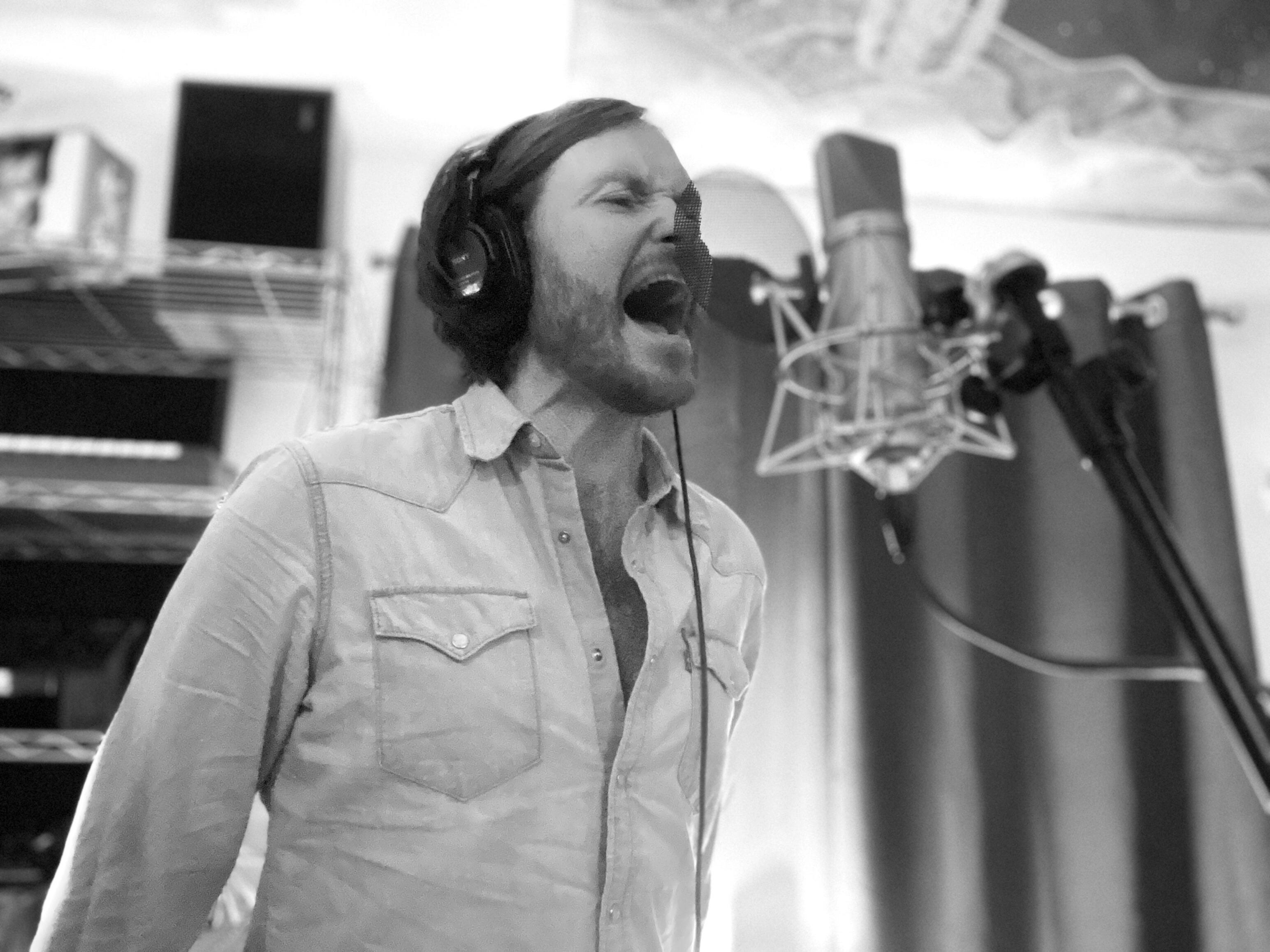
And that experience really felt like it translated to a better recording. Alex and I share wanting things to sound interesting and cool, versus sounding perfect.
DL: Well, it definitely sounds cool. If you’re looking for a cool sound, sir, congratulations, you’ve found one! Hey, Devlin, I want to make sure that I don’t fall back on my old habits, which is to become the interviewer. I really want to push to this word association game. So are you ready for it?
Devlin: Well, I don’t know. We can just jump in and see, see how it goes.
DL: Let’s let’s dive in. I’m just going to throw out a word or a short phrase, and I want you to explore how the album wrestles with that. Our first one is: letting go. How does your album wrestle with letting go?
Devlin: Yeah, letting go is one of the hardest things to do. It’s something that I grapple with all the time. I’ve been sober for thirteen years. It is such a tenet of sobriety: accepting the things that you cannot change.
“Letting go is one of the hardest things to do. It’s something that I grapple with all the time.”
I think it is such an important part of everyone’s lives: being able to move on. I think when you’re facing these uphill battles, like the stuff I was talking about—my best friend Flynn’s suicide, my dad dying, my band collapsing, the person I thought I was going to be or the life I thought I was going to lead—being able to acknowledge what you have versus what you hoped to have, and yeah, just let it go.
Also, I want to be open to ideas when I sit down and try to write a song; to just sit down and play the guitar and see what comes out.
I think letting go is something that works its way into lyrics and into my songwriting approach.
DL: Oh my gosh, I want to have a whole conversation with you just about that. But I’m committed to this word association game. So, are you ready for round two?
Devlin: Sure. Hit me.
DL: How does your new album wrestle with shifting landscapes?
Devlin: It feels like maybe that’s the biggest theme of the songs that mean the most to me on the album. The song Kingdom Comes is largely about that idea of finding safety as the world is crumbling around you, both on a personal and societal level. I think so much of this album is about what you do in these transitional phases.
“Kingdom Comes is largely about that idea of finding safety as the world is crumbling around you…”
DL: By the way, just a quick pause in the game here. The visual nature of this album is astounding. If one allows themselves, the opportunity to listen through this album and close their eyes, they will be visually transported to all of these different landscapes and the transitions between them. I find that super inspiring.
Okay. Next one: resilience. How does your album wrestle with resilience?
Devlin: Well, I value resilience and loyalty as two of the noblest qualities you can have. And I’m trying to look in the face of all of this dark stuff. And death. And finding whatever it is that makes you want to keep going. I think a lot of the songs end up being about that.
The battle is raging. Or perhaps the battle’s over and we already lost. I just know, for me, all I can do is try to find something meaningful with the very little time we have.
DL: Yes, please. And by saying that, I think you launched us into the next word. How does your album wrestle with gratitude?
Devlin: I think that gratitude is probably the most reliable antidote to anxiety and despair. When you put yourself in a posture of gratitude, it’s easier to tap into your resilient nature.
“Gratitude is probably the most reliable antidote to anxiety and despair.”
I do gratitude walks where you go out on a walk and you think about all of the things that you’re grateful for in that moment. All the things you’ve been grateful for in the past. And then you switch to all the things you want to be grateful for in the future.
And spending ten minutes on a morning walk doing that helps shape your outlook for the day.
I think that trying to get to a place of gratitude is the goal. And I think that is at the core of a lot of these songs [on the album] that look death in the face and and try to find the hope in there.
DL: I want to ask you one question in closing. And it’s a question about your feelings. How does it feel to have this album out in the world?
Devlin: It’s a mixed bag to be honest. I love the album. I don’t know that I’ve ever quite felt as pleased with something that I worked on. I hope everyone in the world will listen to it. I am very, very proud of it, and proud of all the work that everyone put into it.
I also feel some relief that I have this achievement to share with other people. If in forty years I’m still around, and someone goes, “Oh, you used to you used to make music,” I can say, “yeah, listen to this.”
DL: Yeah, and then proceed to blow their minds.
Devlin: That’s the goal, right?
DL: Right!
Devlin: But there’s some sense of relief and, dare I say, accomplishment. It set out to make an album that I would really want to listen to. And I feel like we managed to achieve that. I love this album. I love listening to it.
I sound like an egomaniac when I say it, but I if I heard this, it would be my favorite album of the decade.
DL: 100%. It is an accomplishment. And you should be proud of it. And I do think it’ll stand the test of time. I think it’s wicked special. I’m grateful, to have spent as much time with the album as I have.
I have so many more questions for you and so many more words I’d like to throw at you. But mostly, Devlin, I just want to urge people to sit with your new album. I want them to let it take them places.
Thank you for joining me in conversation, Devlin. This was a bona fide treat. Congratulations on the album. It’s astounding!
Devlin: Thank you. Thank you so much.
Hey you! I’m trying to sustain the quality and frequency of The Junction. It’s a labor of love, but it is labor. It helps me when you subscribe. At the very least, enjoy a free subscription.
If you don’t want to become a paid subscriber, but support me and want to show it, PayPal me a one-time donation. If you don’t like PayPal, you can buy me a coffee.
If money is tight, you can still help. How? Share The Junction with someone who might appreciate it.
Oh, and you’re always invited to check out my other projects over here.