
Resilience After Impact
One year of healing and flinching at intersections

I think about resilience a lot. I’ve written about it before, most notably in this piece, which explores the charge that Gen Z is sensitive but not resilient. To stay true to form as a navel-gazing Substacker, I shall now, with the misguided hubris endemic to men my age, quote myself from my 2023 essay, Sensitive, Not Resilient?
Sensitivity describes how strongly we feel in response to other people and our circumstances. Resilience describes how we navigate those feelings.
Resilience helps us, perhaps particularly the most sensitive among us, to manage stress. It’s a character trait. It’s also a learned skill.
Resilience is a skill we learn in the face of trauma and tragedy, anxiety and adversity. It’s not about grit or toughness; it’s about bouncing back. Resilience is about adapting and growing. Ultimately, it’s about empowerment.
I concluded that piece with this question: What can you and I do to foster resilience in Gen Z?
One year ago this week, I was hit by a car while riding my bike. Not a metaphor. Not a parable. An actual car. A real hood. A loud thud. Cold aspahalt. Another thud.
The concussion ebbed. The bumps and bruises healed, but the shoulder didn’t. I had surgery in November.
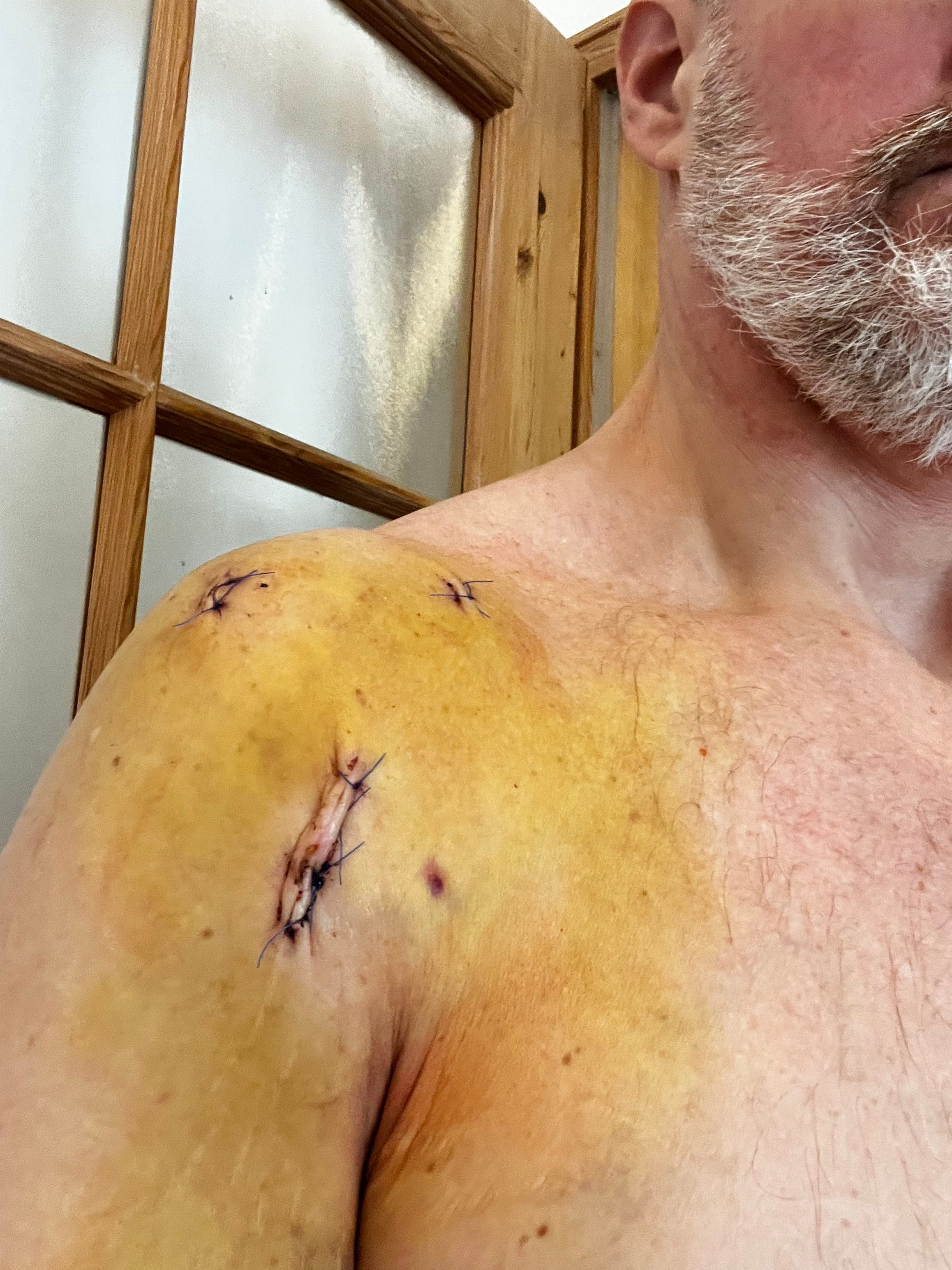
I’m doing my PT. I’m committed. But, I’m starting to reconcile with the possibility that I might never fully heal.
Here’s the part I didn’t expect: I didn’t just lose some physical confidence. I lost narrative confidence. The quiet belief that if I do things mostly right—wear my helmet, follow the rules of the road, raise my kid with empathy, show up for my students—I will be met with some baseline level of fairness from the universe.
You can wag your finger and call that privilege. Fine. On my worst days, I might react the same way.
Either way, the universe did not get the memo. And I might never be able to throw a ball or wrestle with my daughter again. Or climb. Or swim. Or…
Resilience matters to me. As a teacher, I teach it. As a parent, I strive to model it. But in the year since that accident, my sense of resilience has felt, umm, slippery. Like trying to grip a bar of soap in a public shower while a buff naked dude with tribal tattoos next to you keeps toggling your water from hot to cold, repeatedly asking, “Have you tried mindfulness?”
So when I heard a podcast conversation between Dr. Tara Narula and Dan Harris about resilience, I felt seen. Slightly attacked, but seen.
Narula is a cardiologist in Manhattan and an associate professor of cardiovascular medicine at Fordam University. She is also a medical correspondent for NBC News who studies how mindset and physiology dance together in recovery.

Dan Harris is a former ABC news anchor who had a cocaine-fueled panic attack on Good Morning America and then built a career explaining meditation to skeptics and strivers who would like enlightenment, but on their schedule. His podcast tagline is: self-help for smart people. I listen anyway.
Not a guru, more than just humble, Harris “teaches from the fetal position.”
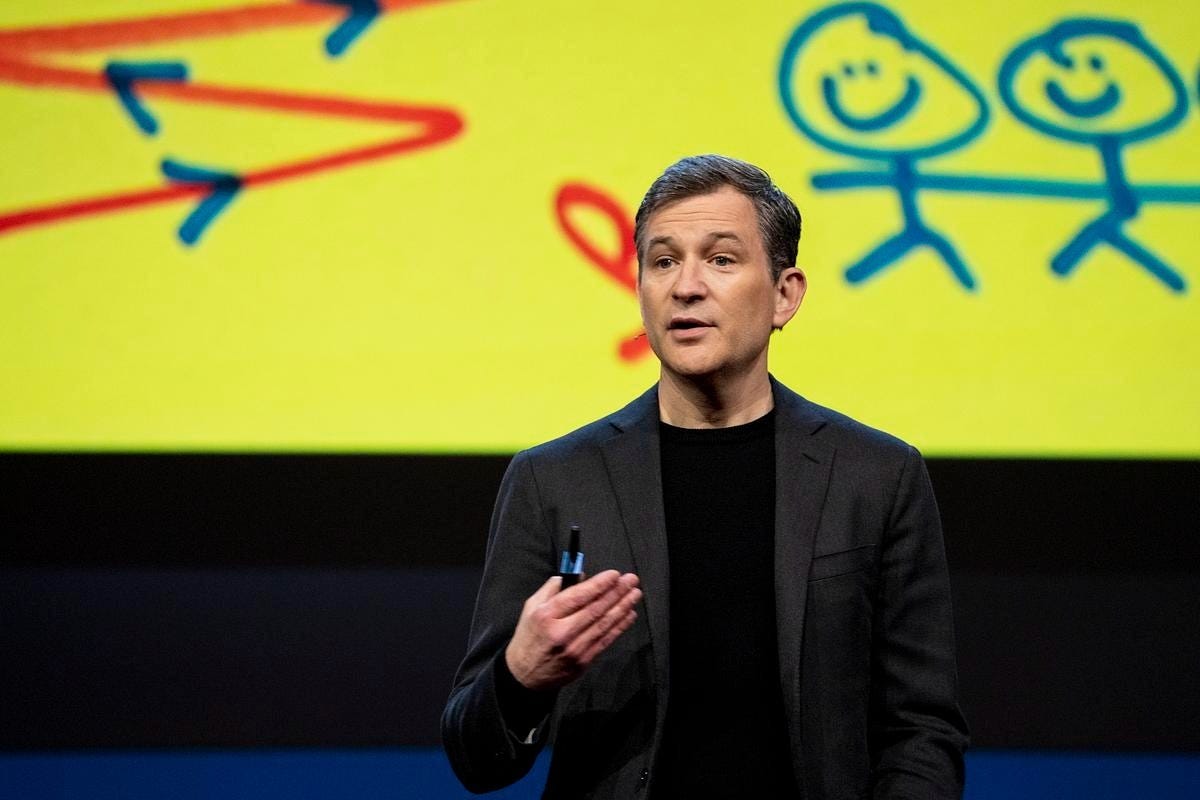
Dr. Narula joined Harris’ 10% Happier podcast to share a framework from her brand-new book:
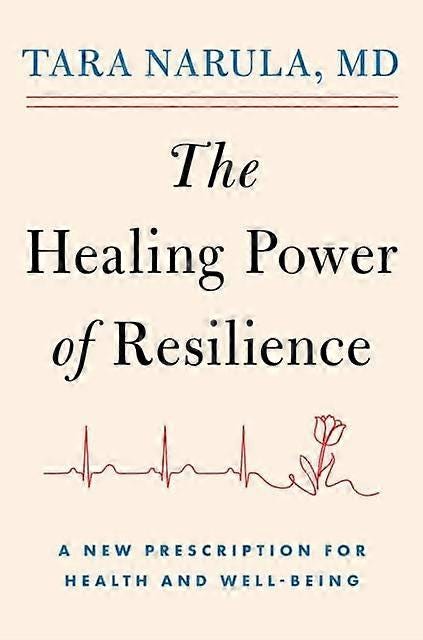
She answers the very question I ask at the end of Sensitive, Not Resilient? by offering specific steps to resilience. Not platitudes. Not “just be stronger.” More like a field manual for those of us whose nervous systems have seen some things.
Here are Narula’s 8 Steps to Resilience. These are best seen not as commandments, but as invitations.
1. Acceptance
Not resignation. Not “everything happens for a reason,” which must be one of the most emotionally useless sentences in the English language.
Acceptance, as Narula frames it, is naming reality without flinching. She tells stories of patients who couldn’t begin healing until they stopped arguing with the diagnosis. “Why me?” is understandable. But it’s also exhausting. Acceptance is hard work. Acceptance is where the real work starts.
Post-accident me spent months thinking, This shouldn’t have happened. True. Also useless. Acceptance for me meant finally saying: I didn’t do anything wrong. I am more afraid on a bike now. I might not fully heal. I’m not broken. Not weak. Just changed.
2. Flexible Thinking
Resilience dies in rigidity.
Narula describes how people who recover well medically often revise their self-story. Instead of my life is shit, it becomes my life is different now.
I didn’t lose cycling; I lost carefree cycling. I didn’t lose my life; I lost full use of my dominant arm for a while. That’s different. Annoying as hell. But different.
Flexibility isn’t toxic positivity; it’s narrative agility, a kind of mental jazz.
3. Lifestyle as Medicine
Sleep. Movement. Food. The holy and wholly unsexy trinity.
Dr. Narula talks about patients with heart disease whose biggest breakthroughs weren’t surgical—they were behavioral. Walking became therapy. Sleep became sacred. Stress reduction wasn’t optional; it was medical care.
This is where resilience trades inspiration for routine.
4. Facing Fears
Avoidance provides relief. Briefly. Then it metastasizes.
Narula shares examples of patients who slowly reintroduced the very activities they feared.
Biking again. Trusting their bodies again. Exposure, not bravado.
Baby steps, Bob. (Anyone with me?)
5. Purpose
Resilience without purpose is just endurance.
In the podcast, Narula returns again and again to meaning. Patients who healed better when they had something to return to. A person. A calling. A creative pursuit. Any reason to get upright in the morning.
Teaching still does that for me. Parenting definitely does. I’m making music and making meaning. Luckily, I’m good on my why.
7. Hope
Regular readers know that I write about hope with some frequency (here, here, and here, for example). As my old pal Shana B. once said about herself on my podcast, I’m a hope junkie.
Narula is careful here. Hope isn’t denial; it’s orientation. A direction you face, even when the road is foggy.
Not optimism. Hope.
I guess I don’t need to be old-me. I just need a believable future-me.
7. Connection
Naula explores how loneliness is a cardiovascular risk factor. That should be printed on billboards.
She describes patients whose recovery accelerated when they stopped going it alone. Friends, family, and community are not emotional garnish. They are essential healing infrastructure.
Resilience, it turns out, is rarely a solo act.
8. Love
Narula saves this one for last, and it lands.
Love for others, yes. But also the harder one: love for the self that didn’t prevent the bike accident, didn’t foresee the illness, didn’t manage the chaos perfectly.
It’s so damn hard.
Self-love is not indulgence. It’s a renewable energy source.
Listening to Narula on 10% Happier (twice: once on the treadmill, once while writing this), I realized something uncomfortable and oddly comforting: my struggle with resilience this year doesn’t mean I lack it. It means I’m rebuilding it.
Resilience isn’t a trait we have. It’s a practice we return to—sometimes limping, sometimes sarcastic, sometimes just grateful to still be in the game.
I’m busted up, sensitive, and working my way back to resilience.
And maybe the truest version of resilience isn’t bouncing back, but learning how to stand, slightly altered, and still forge forward, with purpose, with friends, with love and hope.
Yours,
DL
Hey! I’m trying to sustain the quality and frequency of The Junction. It’s a labor of love, but it is labor. So if you find this thing valuable and you want to support me…
It helps me when you subscribe, free or paid. If you are a regular reader, please show regular support. At the very least, enjoy a free subscription.
If you don’t want to become a paid subscriber, but support me and want to show it, PayPal me a one-time donation. If you don’t like PayPal, you can buy me a coffee.
If money is tight, you can still help. How? Share The Junction with someone who might appreciate it.
Oh, and you’re always invited to check out my other projects over here.
Thank you for this thoughtful and helpful post. I needed to read something like this today <3
I really liked this one. Resilience is a topic that I love and I wish it was talked about more or taught in schools more deliberately. Appreciated your take on the subject!